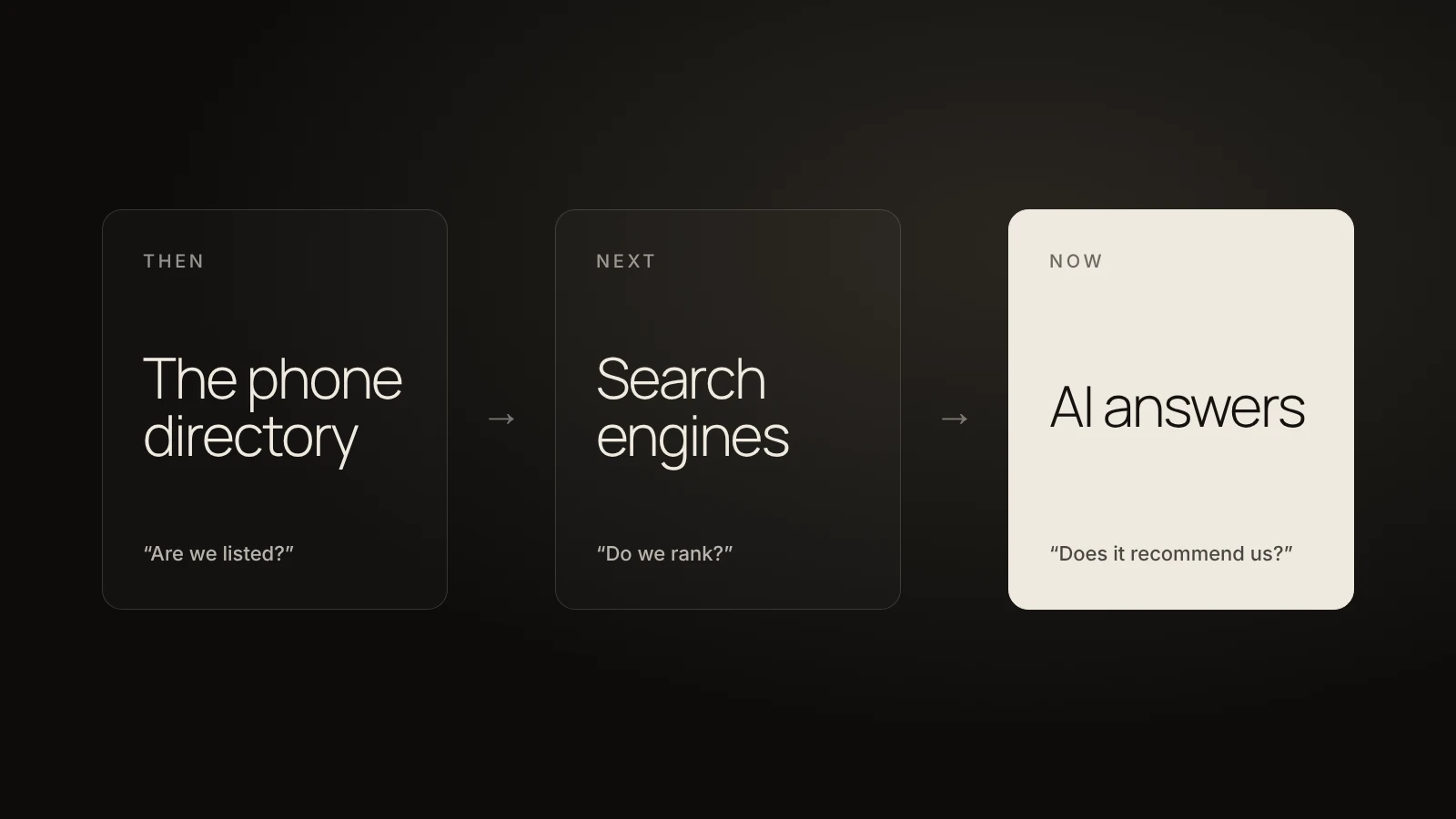
There have been three big shifts in how customers find a business. Each one changed what “being found” meant.
Then: the phone directory
If you needed a plumber, a florist or a solicitor, you opened the Yellow Pages. The question for a business was simple: are we listed? A bigger ad, or a name starting with “A”, put you nearer the top. Customers rang the first few numbers and stopped.
Next: search engines
Google replaced the book. The question became: do we rank? Instead of buying a bigger box, businesses earned their place with useful pages, a fast site and links from other websites. That work became SEO, and for twenty years it decided who got found.
Now: AI answers
Customers now ask ChatGPT, Gemini or Perplexity “who should I use?” or “what should I buy?” and get a short answer with a handful of names, often with reasons attached. The question has changed again: does it recommend us?
The big difference is the shortlist. A search results page shows ten links and more pages after that. An AI answer usually names a few options and moves on. There is no page two.
What hasn’t changed
The basics are the same as they were in the directory days:
- Be listed. If AI tools cannot find clear information about you, they cannot recommend you.
- Be accurate. Wrong prices, old addresses or outdated products put people off, whether they read them in a book or an AI answer.
- Be easy to choose. Make it obvious what you do, who it is for and why you are the right pick.
What’s different
AI tools build their answer from many sources at once: your website, reviews, directories, articles and forums. They look for a consistent picture. So the “listing” is no longer one entry in one book. It is everything the web says about you, and it needs to agree.
That puts more weight on a site that explains you in plain language, on structured data that tells machines exactly what you sell, on reviews and mentions elsewhere, and on owning your profile where you can, such as your business profile in ChatGPT.
What to do now
Start by finding out where you stand. Our guide to checking what ChatGPT says about your brand takes about ten minutes. If you want it done for you, the AI visibility audit checks ChatGPT, Gemini and Perplexity against your competitors, and AI search optimisation (GEO) is the ongoing work to improve how you show up.
The brands that moved early to Google had an advantage for years. The same window is open now.