Customers now ask ChatGPT, Gemini and Perplexity who to buy from, and get a short answer with a few names in it. Either you are in that answer, or you are not. Most brands have never checked which one they are. (Why this shift matters.)
How to check, in ten minutes
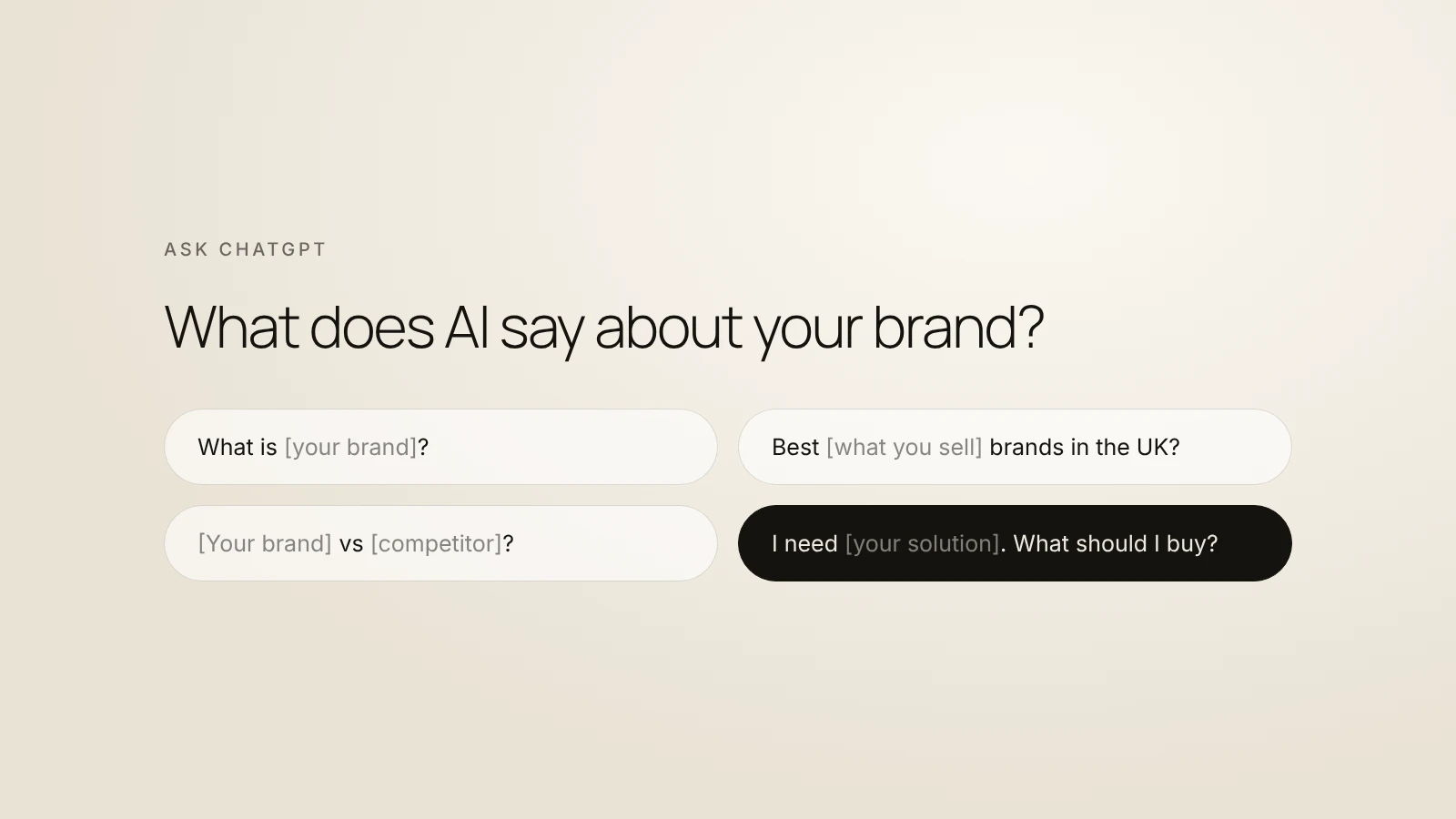
Open ChatGPT, ideally logged out or in a temporary chat so your own history does not shape the answers. Then ask the questions your customers would ask:
- The direct question. “What is [your brand]?” and “Is [your brand] any good?”
- The category question. “What are the best [what you sell] brands in the UK?” or “Who should I use for [your service] in [your city]?”
- The comparison. “[Your brand] vs [your main competitor]: which is better?”
- The buying question. “I need [the problem you solve]. What should I buy?”
Run the same questions in Gemini and Perplexity. Perplexity shows the sources it used, which is useful later.
What to look for
Are you named at all? If the category question returns three competitors and not you, that is the most important finding.
Is it accurate? Check products, prices, locations and what you are known for. AI tools sometimes describe a brand from old or thin information, and get details wrong.
Who is named instead? Note which competitors appear and how they are described. That tells you what the AI thinks your category values.
What sources does it lean on? Where tools show sources, see which sites they draw from: your own site, review sites, directories, articles or forums.
What shapes the answer
AI tools do not simply copy Google’s rankings, but much of the groundwork overlaps. The things that tend to matter:
- A site that explains you clearly. Plain pages that say what you sell, who it is for and where you operate, rather than vague brand language.
- Structured data. Markup that tells machines exactly what your business, products and prices are.
- What the rest of the web says. Reviews, listings, press and articles. AI tools look for agreement across sources.
- Your business profile. OpenAI now lets businesses claim their profile in ChatGPT, so your details come from you.
What to do next
Write down what you found: where you appear, where you do not, and anything that is wrong. Fix the inaccuracies first, then work on the questions where competitors appear and you do not.
If you would rather have it done properly, our AI visibility audit runs these checks across ChatGPT, Gemini and Perplexity, compares you against competitors and gives you a ranked list of fixes. The ongoing work to improve how you show up is our AI search optimisation (GEO) service.